The case for the second-hand amplifier.
A long, slightly defensive argument in favour of buying a forty-year-old British integrated amplifier instead of anything that has been advertised to you in the last decade. With caveats. There are always caveats.
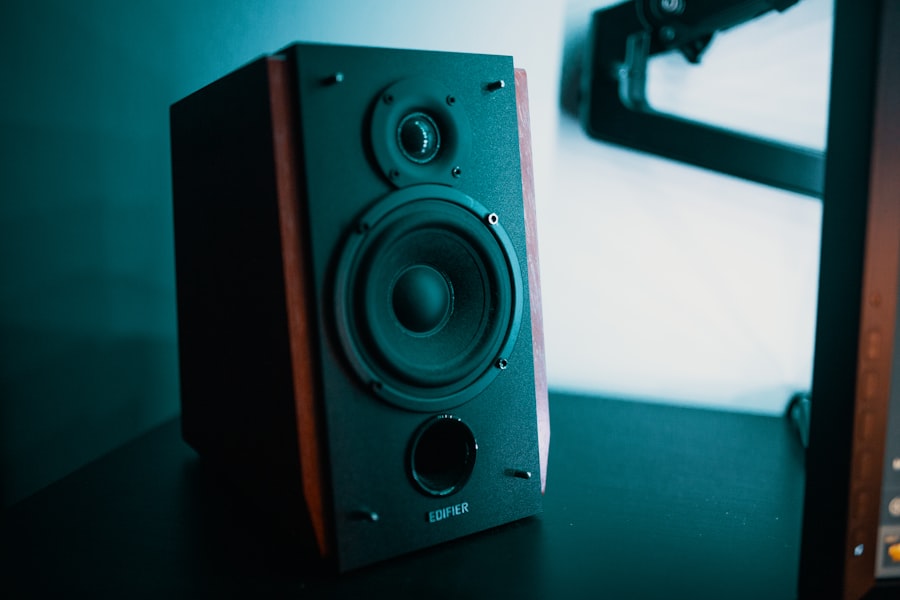
The amplifier on my workbench at the moment is a British integrated of the late 1970s, weighing somewhere around fourteen kilos, with a faceplate that has yellowed slightly along the top edge and two small chips of paint missing near the left-hand knob. It works perfectly. It has been serviced once in the past three years. It cost, including the service, less than a quarter of what a new amplifier of equivalent build quality would cost in 2026, and it sounds, to my ears and to the ears of every visitor I have ever asked, better than the new one.
This is not, I want to be clear at the start, a nostalgia argument. Nostalgia is one of the more dangerous emotions in any discussion of vintage equipment, and the listening rooms of this country are full of expensive evidence that it leads people to spend money on objects that do not, in fact, sound good. What follows is, I hope, a more practical argument. It is also, by the standards of this magazine, an unusually opinionated one.
What you are paying for in a new amplifier
The first thing worth understanding about the new amplifier market in 2026 is how little of the price tag is actually about sound. A significant fraction of any mid-priced new amplifier's cost goes on the chassis and the front panel, which are produced to make the object look serious in a hi-fi shop. Another significant fraction goes on the inputs — typically a dozen or more, including several you will never use — and on the digital section, which is included whether you want it or not.
The amplifying circuit itself, the part that does the work of turning a small signal into a large one, is often a smaller proportion of the build cost than it was forty years ago. This is not because manufacturers are cynical. It is because the price pressure from competing categories — networked audio, all-in-one units, soundbars — has forced the traditional amplifier to justify itself by offering more inputs, more features, and more visible chassis.
What you are not getting, in most cases, is a meaningfully better amplifier circuit. The circuits in mid-priced 1970s and 1980s integrated amplifiers from the better British and Japanese manufacturers were, in many cases, designed by engineers who would today be writing white papers for the high end. The component quality was high, the manufacturing tolerances were generous, and the design margins were enormous.
The circuits in mid-priced 1970s and 1980s integrated amplifiers were, in many cases, designed by engineers who would today be writing white papers for the high end.
What you are paying for in an old amplifier
An old amplifier, by contrast, is almost entirely the amplifier. There is no DAC, no streaming module, no menu system. The chassis was made forty years ago by a manufacturer who took for granted that the chassis would last forty years. The components inside are, in many cases, still within their original tolerances — and the components that are not (typically the electrolytic capacitors in the power supply, occasionally the smoothing capacitors) are easy and inexpensive to replace.
A properly serviced unit of this kind will, in my experience, comfortably outperform a new amplifier of equivalent retail price. It will also, with one more service cycle in ten years' time, continue to do so for another decade.
The caveats — which are real
I promised caveats, and there are several. The first is that "buying a vintage amplifier" is not, in most cases, the same activity as "buying a working amplifier." Anything more than about thirty years old is likely to need at least a thorough check-over by someone competent, and possibly a full recapping of the power supply. Anything that has not been serviced in fifteen years should be assumed to need work. The work is not expensive — typically between £80 and £200 for a good service, depending on the unit — but it is not optional.
The second caveat is that not all vintage equipment is good. The British and Japanese mid-range of the late 1970s and early 1980s is, in my experience, the sweet spot. Earlier units often have layout and component-quality issues that are not worth the trouble of solving. Later units, from roughly the mid-1990s onwards, are typically built to a lower mechanical standard and offer fewer of the advantages that vintage units have over new ones.
The third caveat is that "vintage" is not, in itself, a guarantee of anything. There are bad vintage amplifiers. There are very bad vintage amplifiers. There are vintage amplifiers that were bad when new and are bad now. The argument is not for buying old equipment as a category; it is for buying particular old equipment, in particular condition, from particular eras.
What to actually buy
I am reluctant to give specific recommendations, because the moment a particular model is recommended in a magazine, the second-hand price of that model rises and the recommendation stops being useful. I will say, instead, that the following criteria will lead you to a good unit more reliably than any specific name:
It should be a British or Japanese integrated from somewhere between 1976 and 1986. It should have a stated power output between thirty and seventy watts per channel — much less and the headroom is insufficient for most modern speakers; much more and you are typically paying for a chassis that does not improve the sound. It should have been serviced within the past five years, ideally with a written record of what was done. It should have been bought from a private seller or a specialist dealer, not from a general auction site, where the failure rate is much higher and the recourse is much weaker.
The price, in 2026, for a unit of this description tends to fall somewhere between £200 and £600. This compares with a new mid-priced integrated of broadly equivalent build quality at roughly £1,200 to £2,500. The vintage unit will, in almost every case, sound better, last longer, and be cheaper to repair.
The slightly defensive bit
I am aware that this argument is unfashionable. The current mood in the hi-fi press is towards new equipment, new categories, and new features. There are reasonable reasons for this — magazines have to write about something, and there is, by definition, no news in a forty-year-old amplifier — but the consequence is that readers are routinely led to spend money on equipment that does not, in practical terms, improve the sound of their systems.
The vintage market is, by contrast, almost entirely unmarketed. Nobody is paying for adverts. Nobody is sending review samples to magazines. The information about which units are worth owning, and which are not, circulates by word of mouth in the small community of people who actually own and listen to vintage equipment. This makes the market harder to enter, but the reward, for those who do enter it, is real.
I will continue to buy second-hand. So, in my view, should you.